Four hundred bodies spinning around one hand0:00 / 0:42Preview
Ten stops, 22 minutes, on your phone in the museum. The first stop is free, the whole tour $4.99.
Stop 10 of 10 in Vatican Museums Highlights
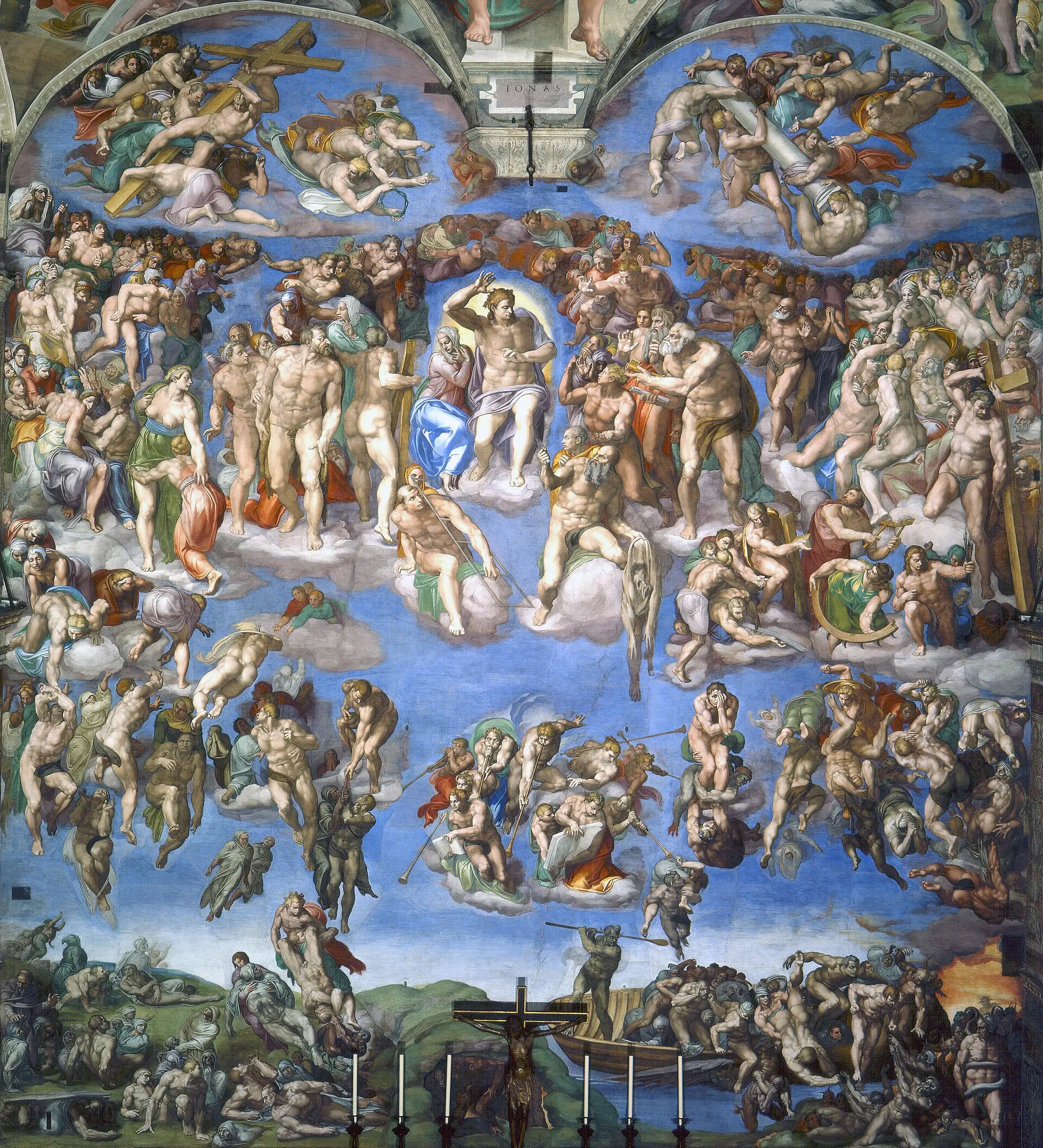
It covers the altar wall of the Sistine Chapel, the last room on the Vatican Museums route.
Ten stops, 22 minutes, on your phone in the museum. The first stop is free, the whole tour $4.99.
Stop 10 of 10 in Vatican Museums Highlights
Where to find it
Michelangelo painted this wall between 1536 and 1541, more than twenty years after he’d finished the ceiling above it. He was in his sixties.
The figures crowd around Christ at the center. The saved rise on the left, and the damned fall on the right.
Look low on the right for Charon, driving the damned out of his boat with his oars. Below him stands Minos, the judge of the underworld, with a serpent coiled around his body.
Saint Bartholomew, just below Christ, holds up his own flayed skin. The face on it is usually read as Michelangelo’s self-portrait.
The papal master of ceremonies, Biagio da Cesena, complained that so many nudes were “most dishonest in such an honoured place”. In 1564, after the Council of Trent, the painter Daniele da Volterra was given the job of adding drapery over them. Romans nicknamed him “the breeches maker”.
Photos and video aren’t allowed in the chapel.