The Garden of Earthly Delights
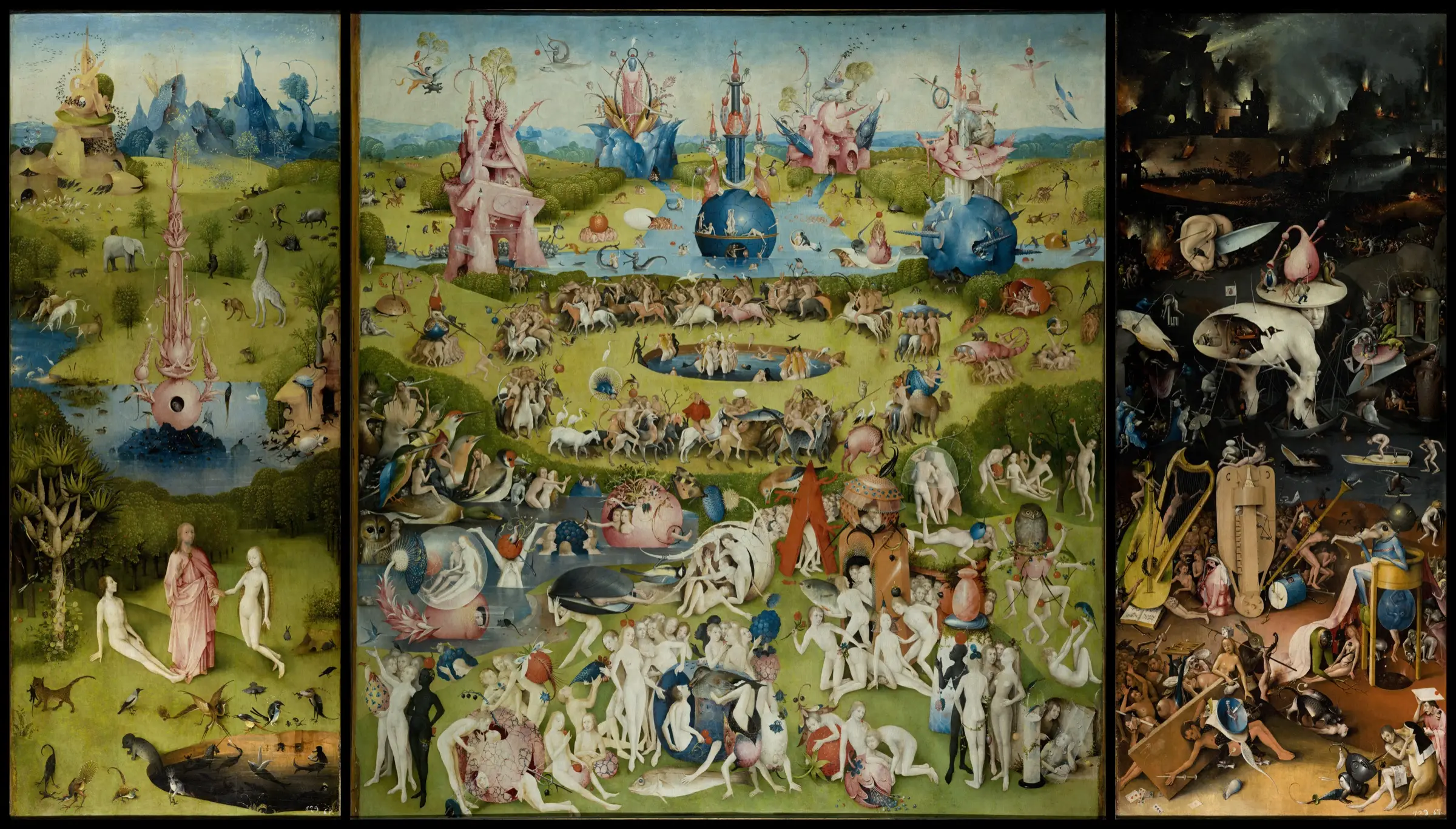
It hangs in room 056A of the Prado: three oak panels painted by Hieronymus Bosch around 1490 to 1500, about two metres high and almost four metres wide when open.
Where to find it
Room 056A, Villanueva building, ground floor.
Read it from left to right
The Garden of Earthly Delights is a triptych, a centre panel with two wings that close over it like shutters. Open, it reads from left to right, and each panel follows from the one before.
On the left is paradise. In the middle, a garden full of people. On the right, where it all ends, hell.
Paradise
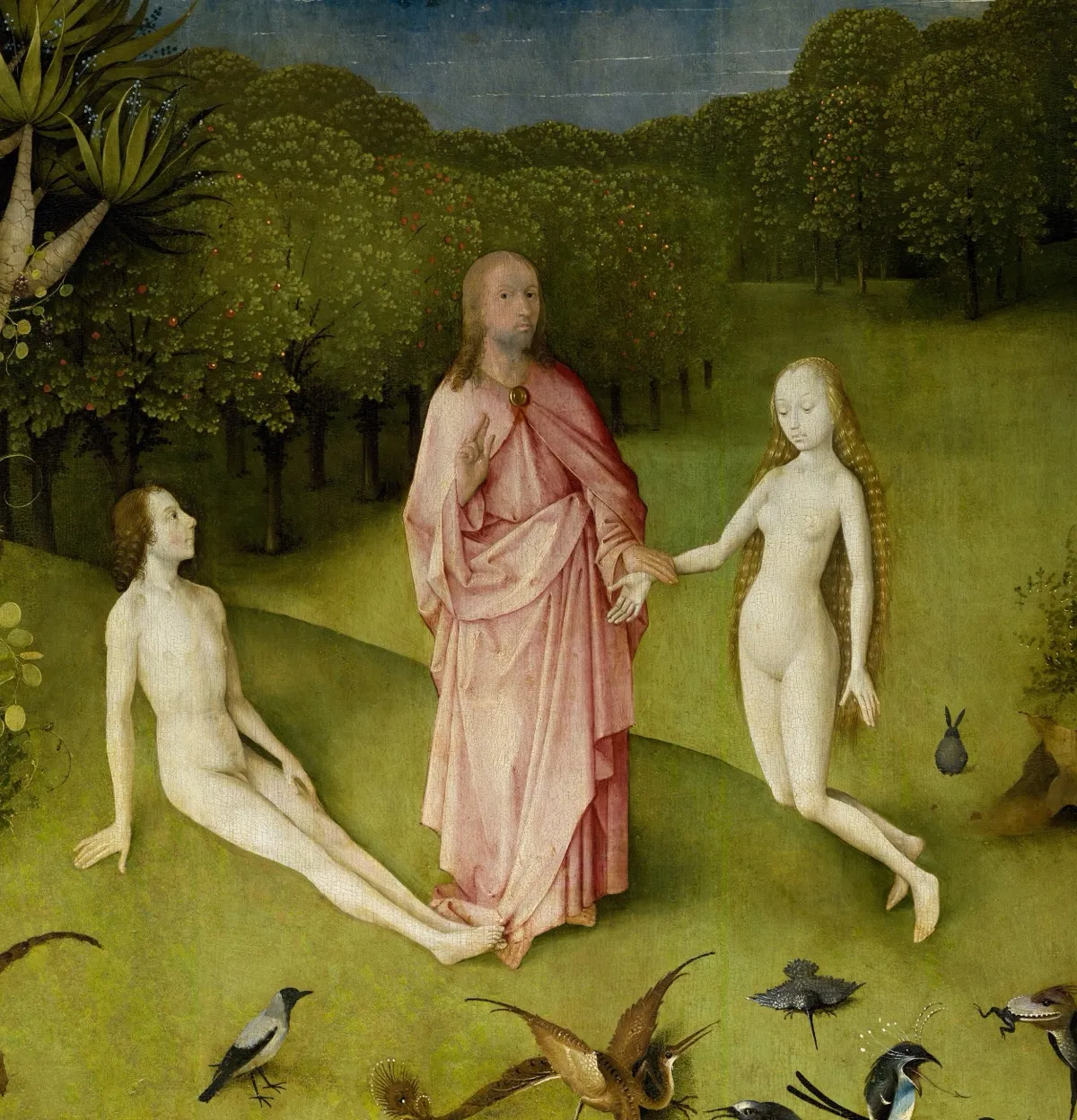
In the left wing, God presents Eve to Adam. Adam has just woken up on the grass, God holds Eve by the wrist and blesses them, and Eve doesn’t meet Adam’s eyes.
Behind them are animals most Europeans of 1500 had never seen: a giraffe, an elephant with a monkey on its back, a lion. The art historian Hans Belting thought many of them came from the travel literature of the time.
The garden
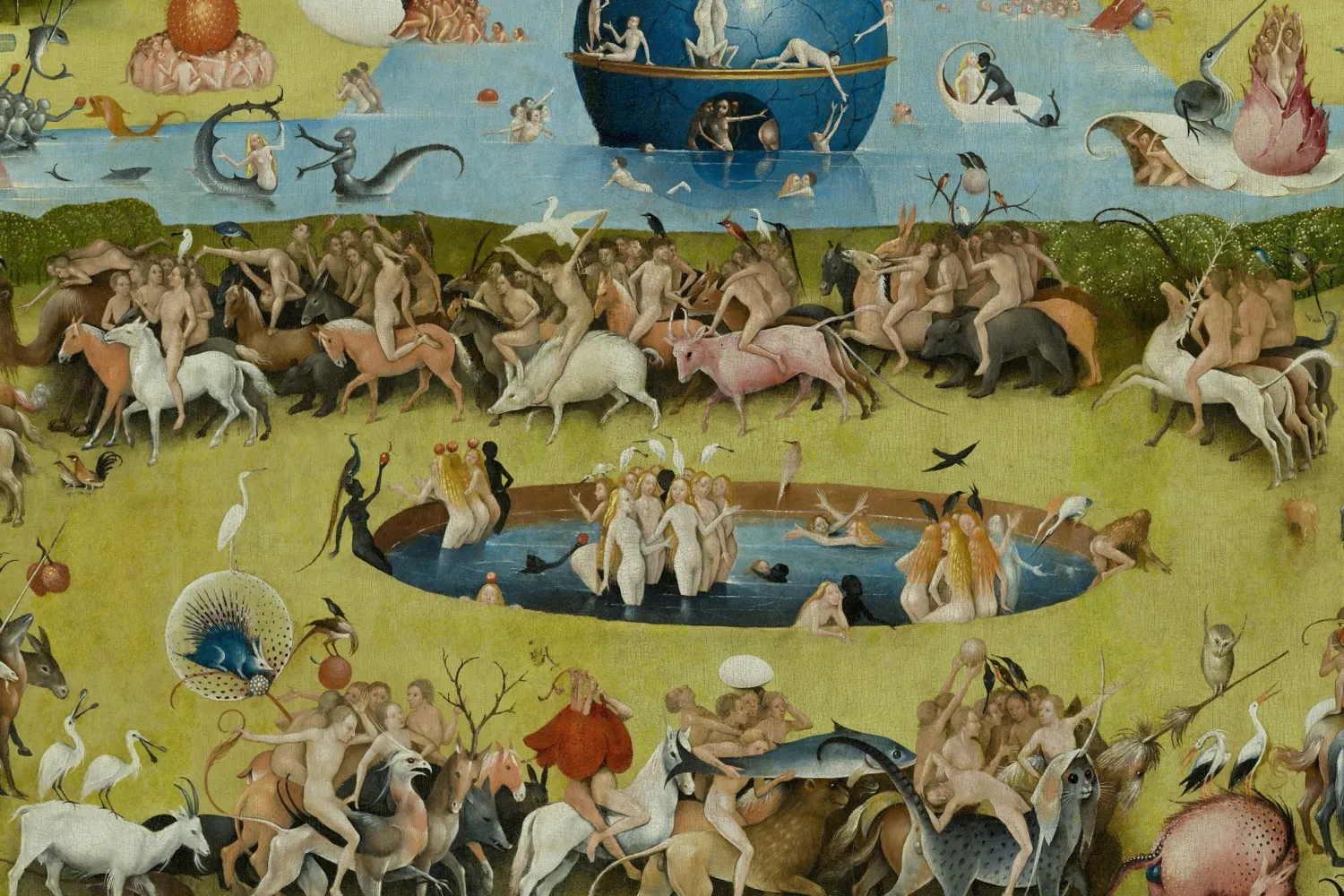
The centre panel gives the painting its name. Hundreds of naked men and women fill a green park, given over to pleasure. Fruit grows to a giant size, ducks are bigger than the people playing with them, and men ride horses, camels and unicorns in a circle around a pool of women.
There are no children and no old people anywhere in it. And unlike The Haywain and The Last Judgment, Bosch’s two other triptychs that run from paradise to hell, there’s no God in the middle panel.
Hell
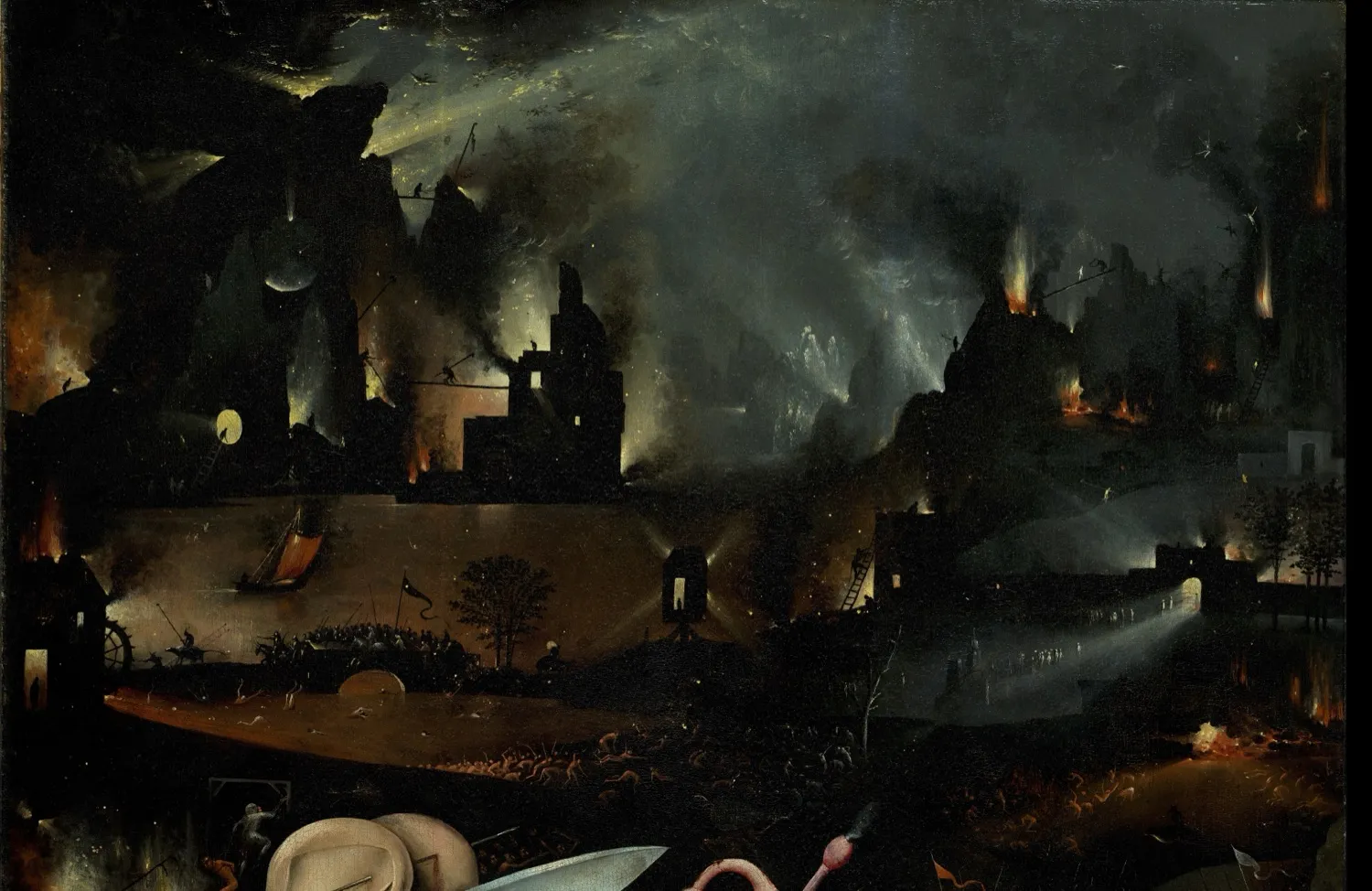
The right wing is night, and cities burn in the background.
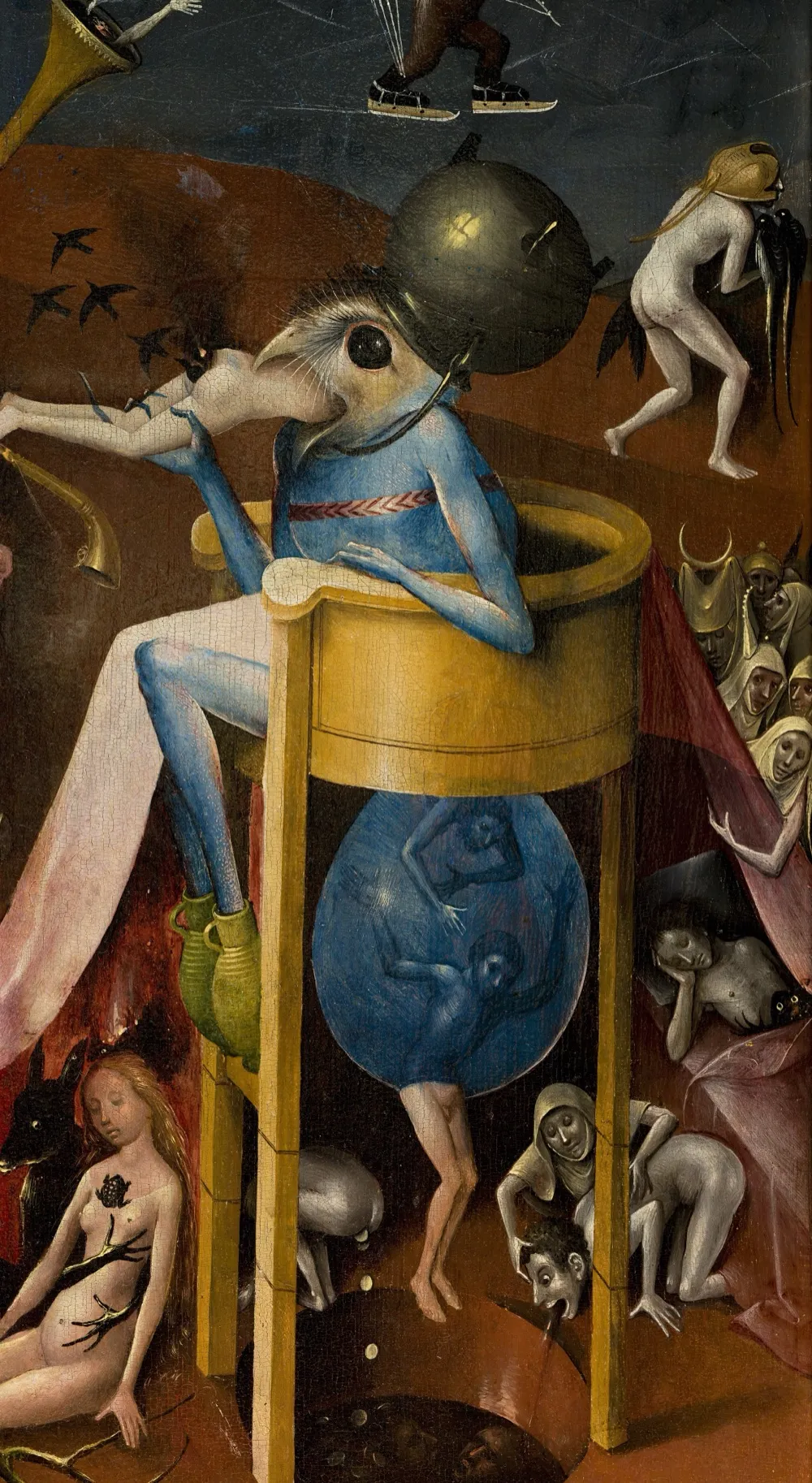
In front sits a giant monster with the head of a bird, on what may be a toilet or a throne. It eats people and drops them through a hole underneath into a glass chamber pot.
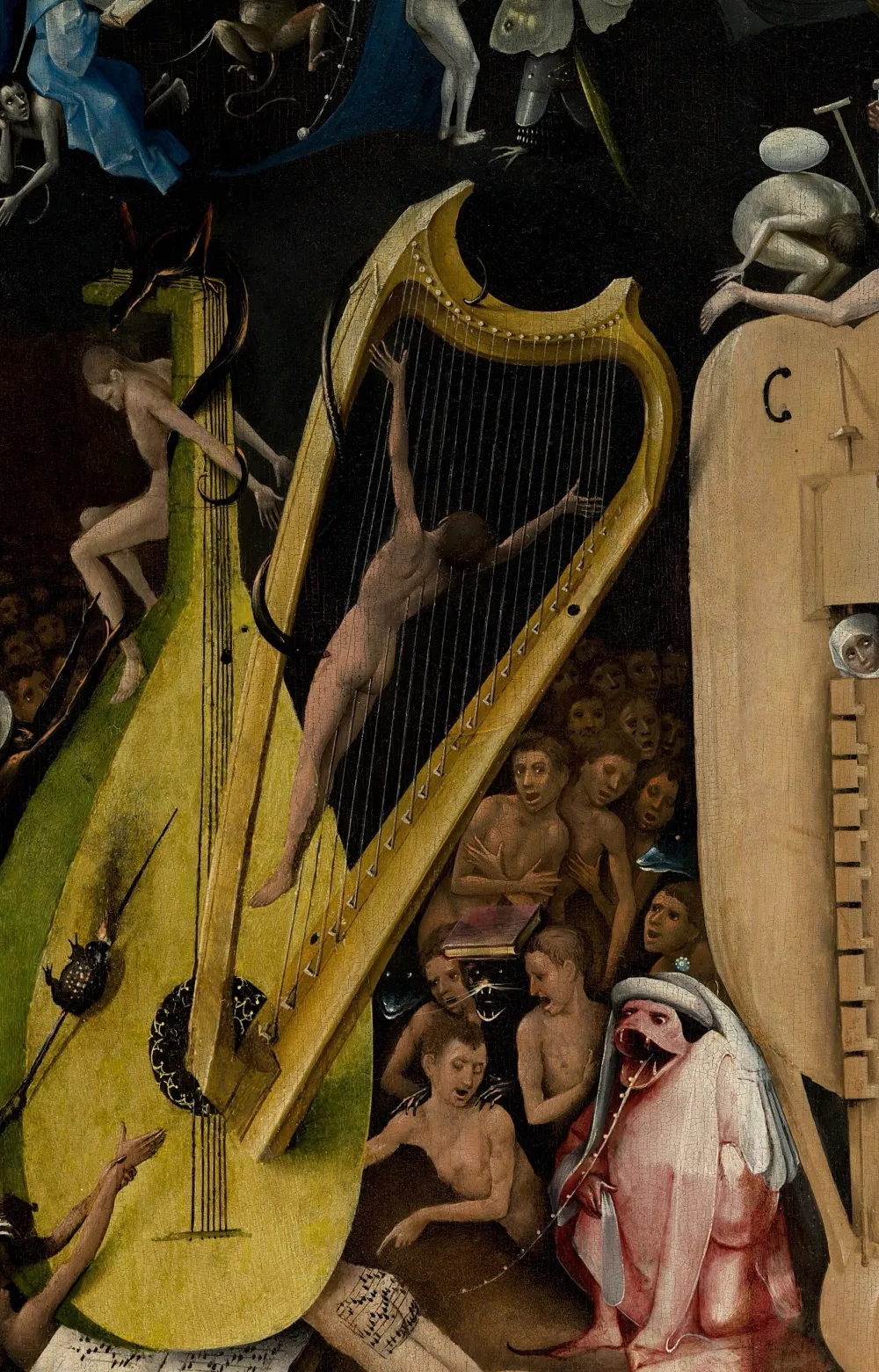
Music is one of the tortures. A man hangs crucified in the strings of a giant harp, and others are pinned to a lute.
The Tree-Man
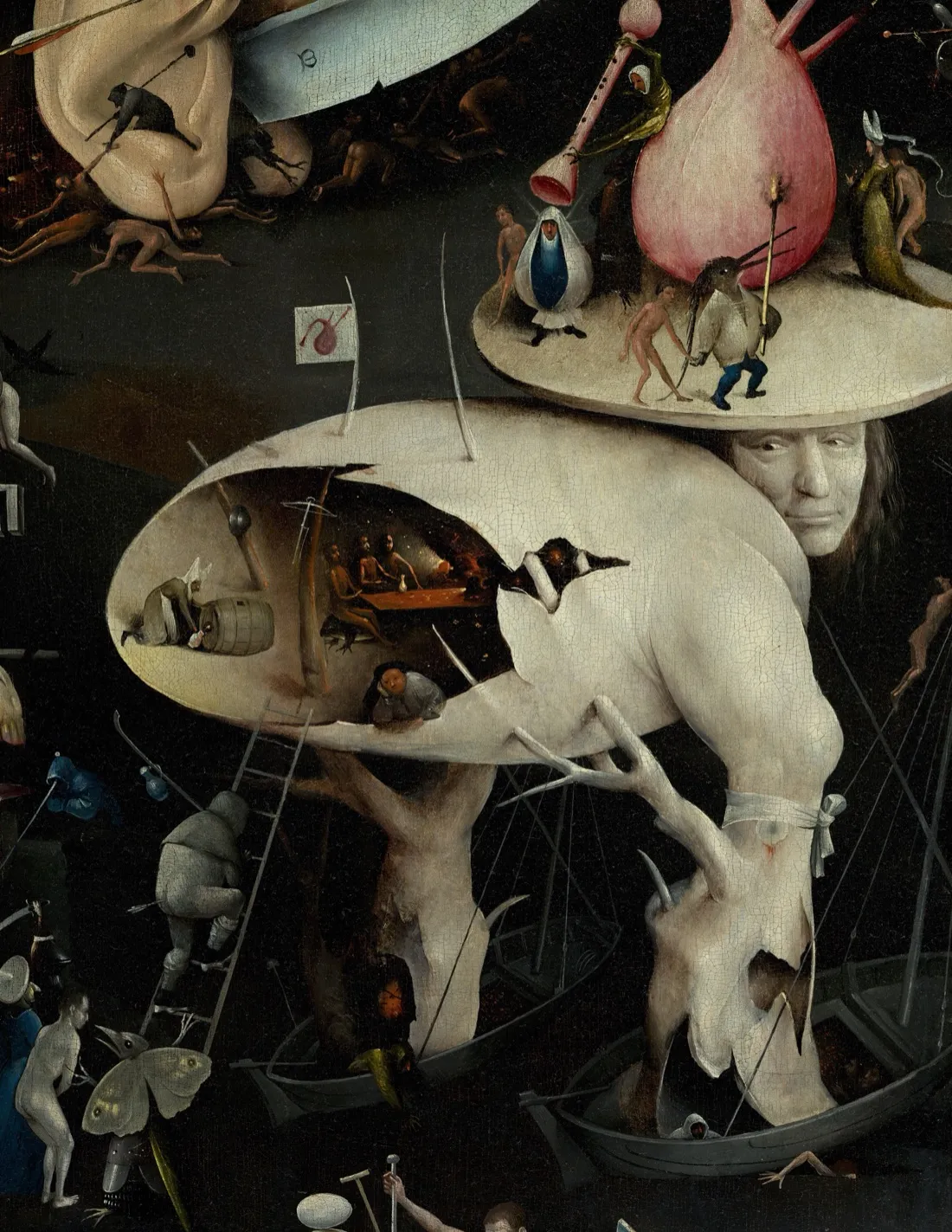
In the middle of hell stands the Tree-Man. His body is a broken eggshell on two tree trunks that stand in boats, and inside him men sit at a table, as in a tavern. On his head, a disc carries a giant bagpipe.
He looks back over his shoulder, out of the painting. Belting proposed that the face is Bosch’s own, a painter signing the strange world he had invented.
The painter
Bosch died in 1516 and left no letters or diaries. Nothing is known of what he thought his paintings meant.
The older masters painted the world of everyday experience. Bosch painted, in the words of the art historian Walter Gibson, “a world of dreams [and] nightmares”. In 1560 a Spanish writer, Felipe de Guevara, wrote that Bosch was regarded merely as “the inventor of monsters and chimeras”.
How it came to Madrid
The first record of the painting is from 1517, a year after Bosch’s death, when an Italian canon, Antonio de Beatis, saw it in the palace of the Counts of Nassau in Brussels.
It passed to William the Silent, who led the Dutch revolt against Spain, and in 1568 the Duke of Alba confiscated it and took it to Spain. Philip II bought it at auction in 1591 and gave it two years later to his monastery of El Escorial. It came to the Prado in 1933.
What came after
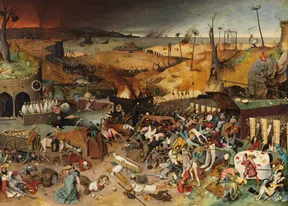
Pieter Bruegel the Elder, Bosch’s best-known follower, used many elements of this hell in his own paintings. His Triumph of Death, painted around 1562, echoes it, and it’s in the Prado’s collection too.
Four centuries later, Joan Miró and Salvador Dalí both knew the painting first-hand, and both regarded Bosch as a mentor. The Surrealists’ fascination with dreams brought new interest in his work.