Las Meninas
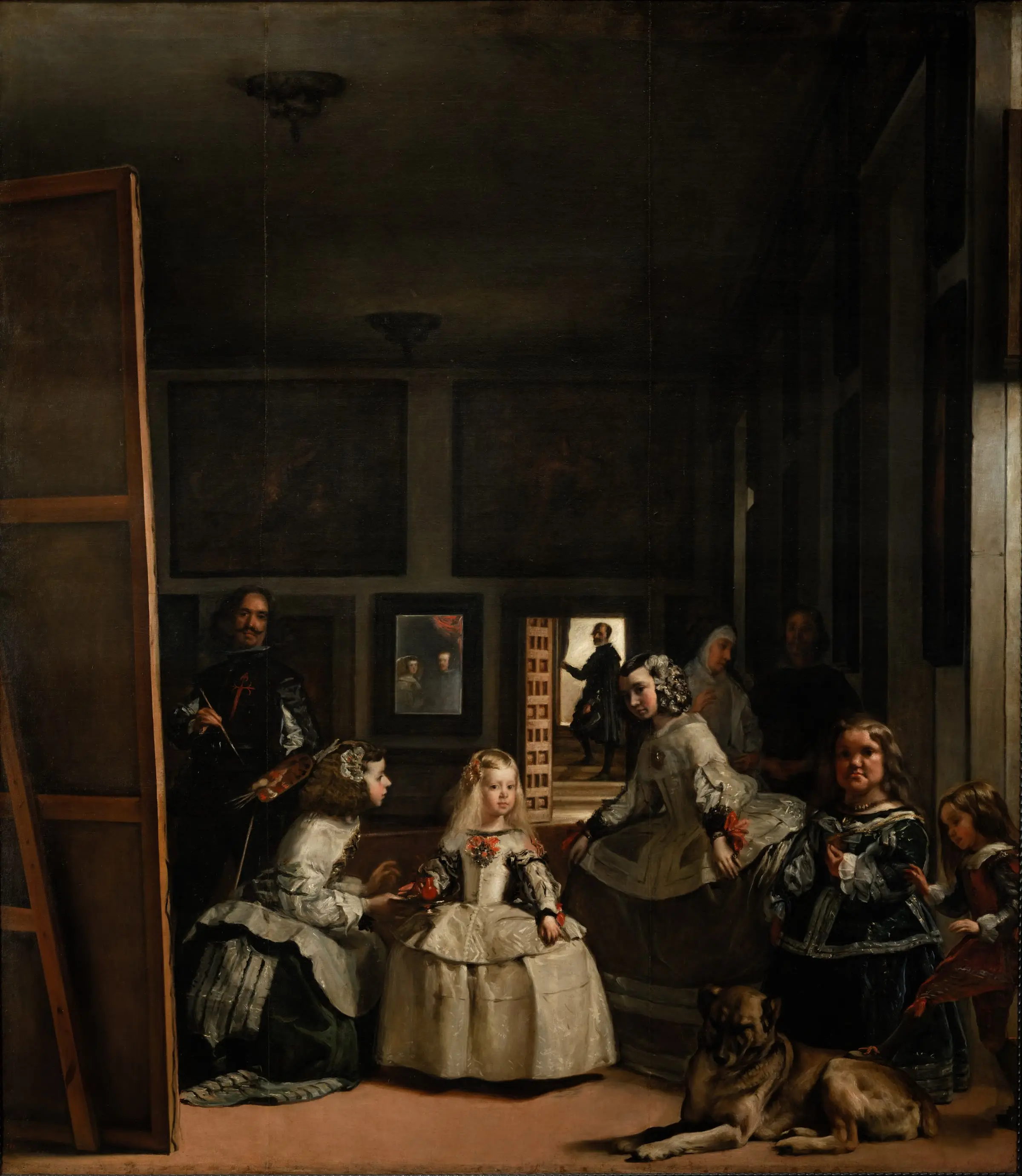
It hangs in room 012 of the Prado, a painting over three metres tall that stands on the floor, so the people in it are your size.
Where to find it
Room 012, Villanueva building, first floor.
Being there
Madrid, 1656. A high room in the old royal palace, the Alcázar, that Velázquez used as his studio. The art historian Kenneth Clark said our first feeling in front of the painting is of being there.
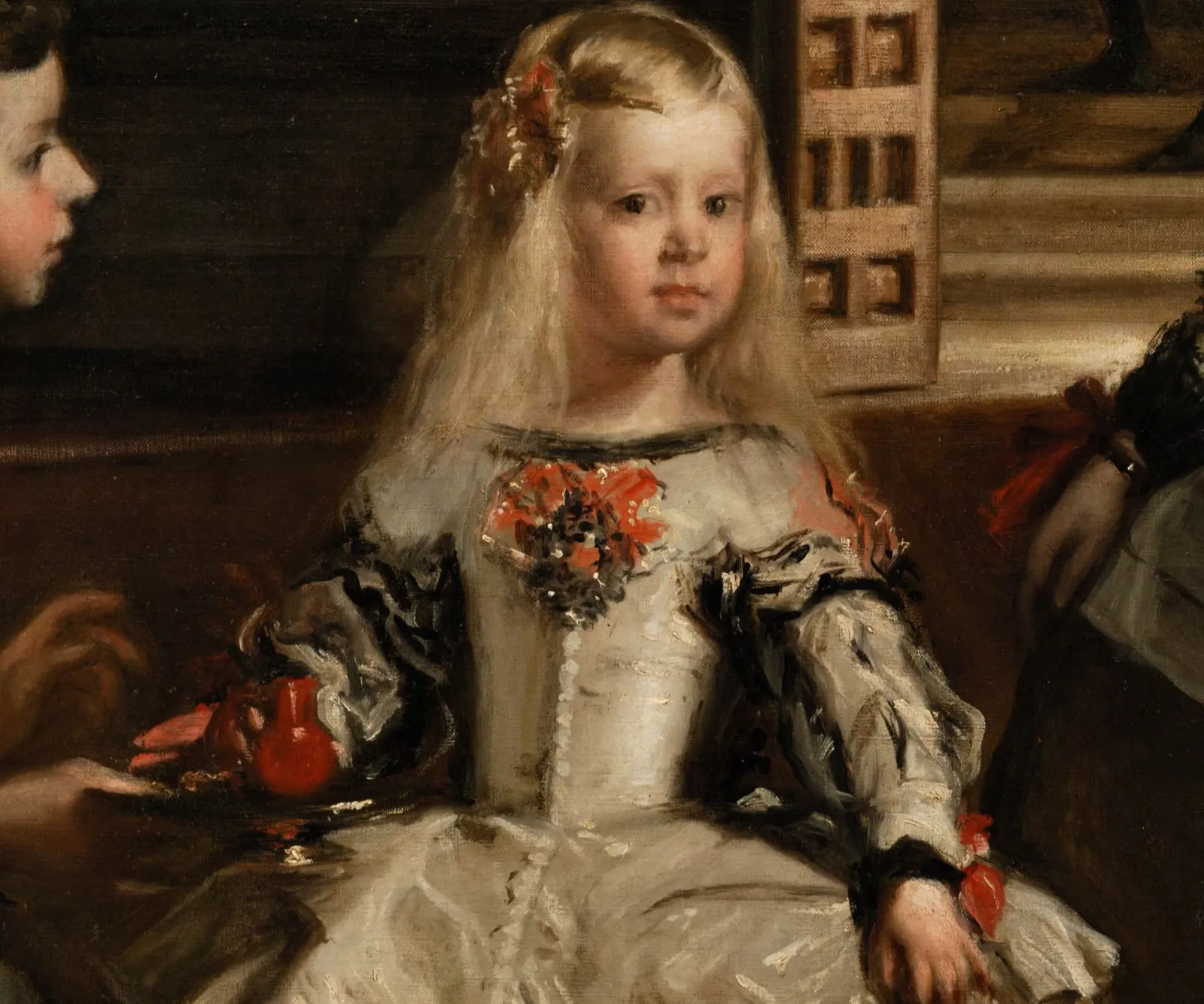
In the middle stands the Infanta Margarita, five years old, the king’s only surviving child. Clark again: she doesn’t want to pose. She has had enough.
Who is in the room
Around her, the household. On her right, María Agustina Sarmiento kneels and offers her a drink in a small red cup on a golden tray. On her left, Isabel de Velasco is about to curtsy. These two are the meninas, the maids of honour, and the painting takes its name from them.
Further along, Mari Bárbola and Nicolás Pertusato, the court dwarfs. Nicolás is nudging the dog with his foot, and the dog has decided not to notice.
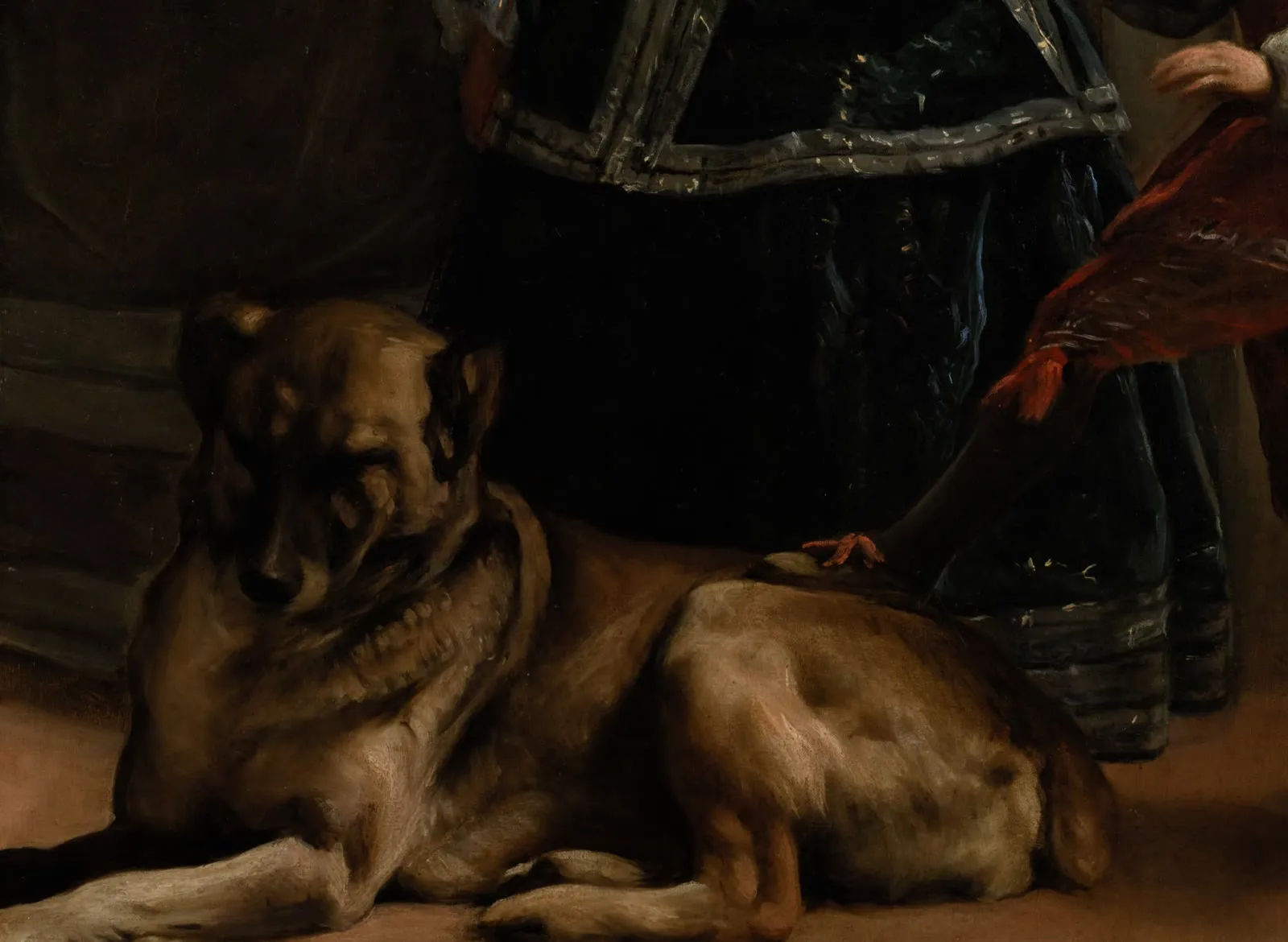
Behind them, half in shadow, the Infanta’s chaperone, dressed in mourning, is talking to a guard. And at the very back, in the open door, José Nieto, the queen’s chamberlain, one foot on one step and one on another. Nobody has ever settled whether he’s coming or going.
The painter
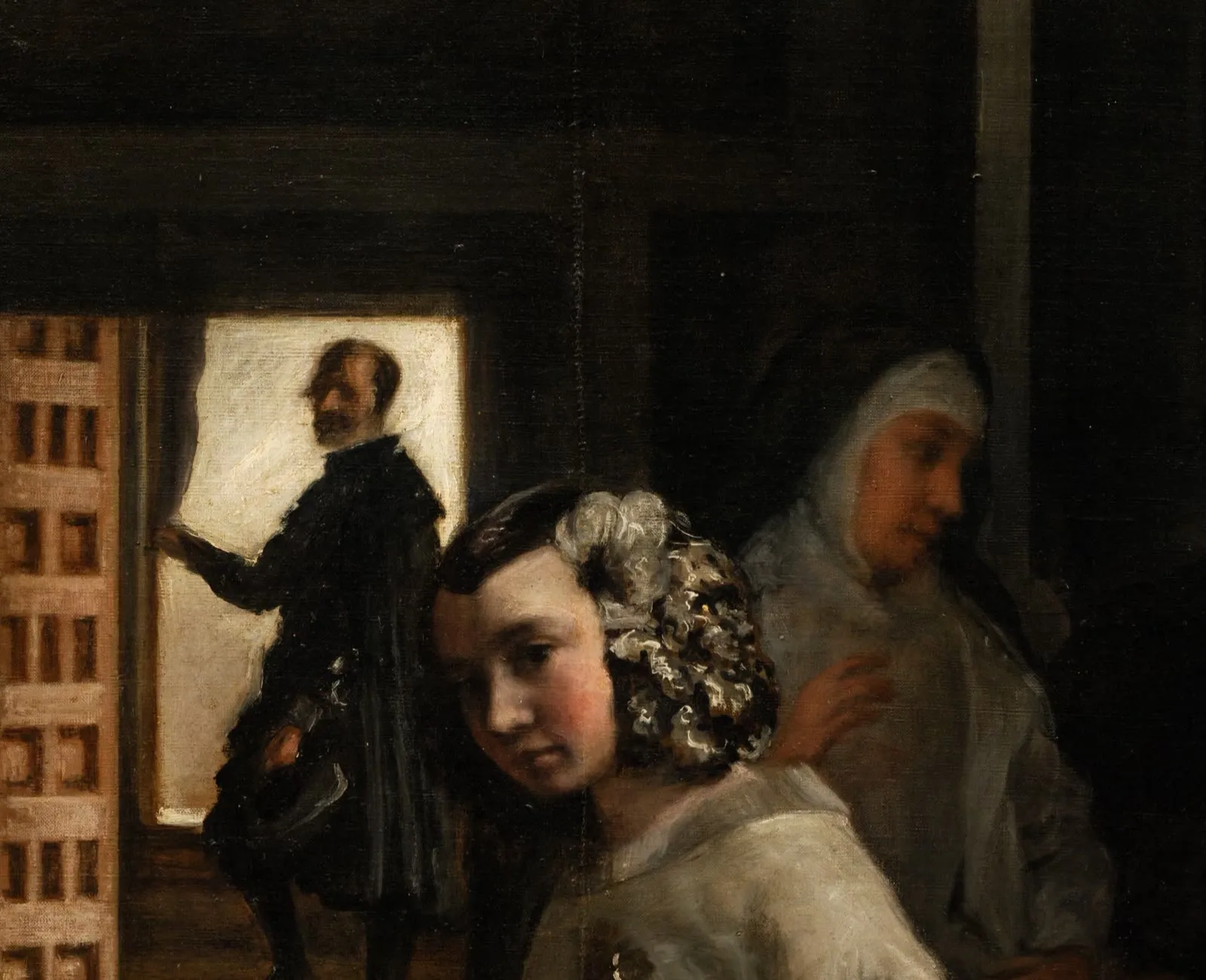
At the left, Velázquez himself. Brush in one hand, palette in the other, the keys of his palace offices at his belt. He’s working on a canvas so large that we only see its back. And he’s not looking at the Infanta. He’s looking at us.
Under infrared light you can see that he first painted his head tilted the other way, then changed his mind.
The mirror
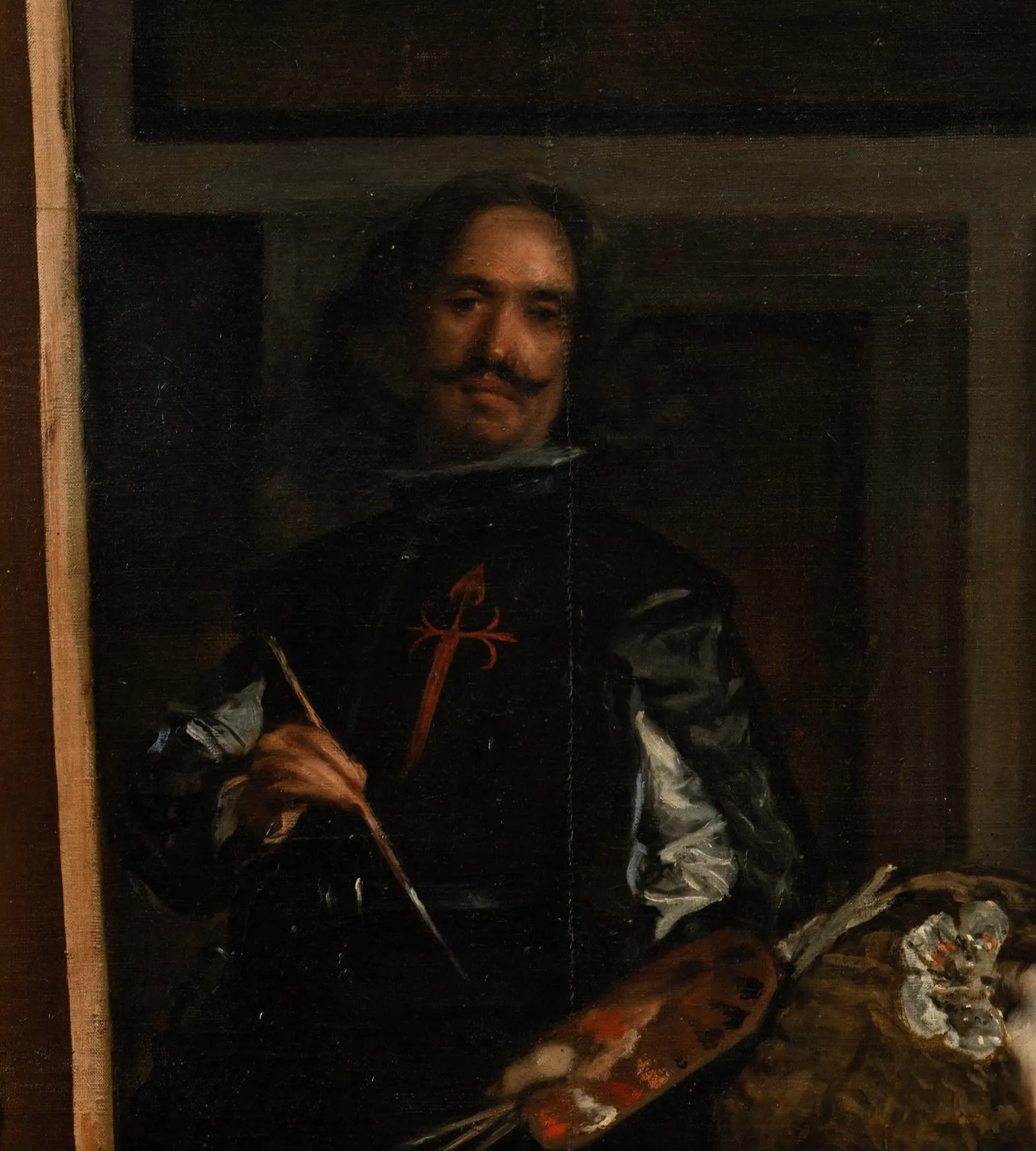
On the back wall, between the paintings, hangs a mirror. Two faces in it, lit and blurred: King Philip IV and Queen Mariana. We know them from Velázquez’s other portraits.
The mirror tells us where they are: outside the painting, where we’re standing. So the most common reading is this: the king and queen are posing, the painter is painting them, their daughter has come to watch, and we see the room from their place. Other readings exist. Four centuries on, the painting still doesn’t say.
The light and the back wall
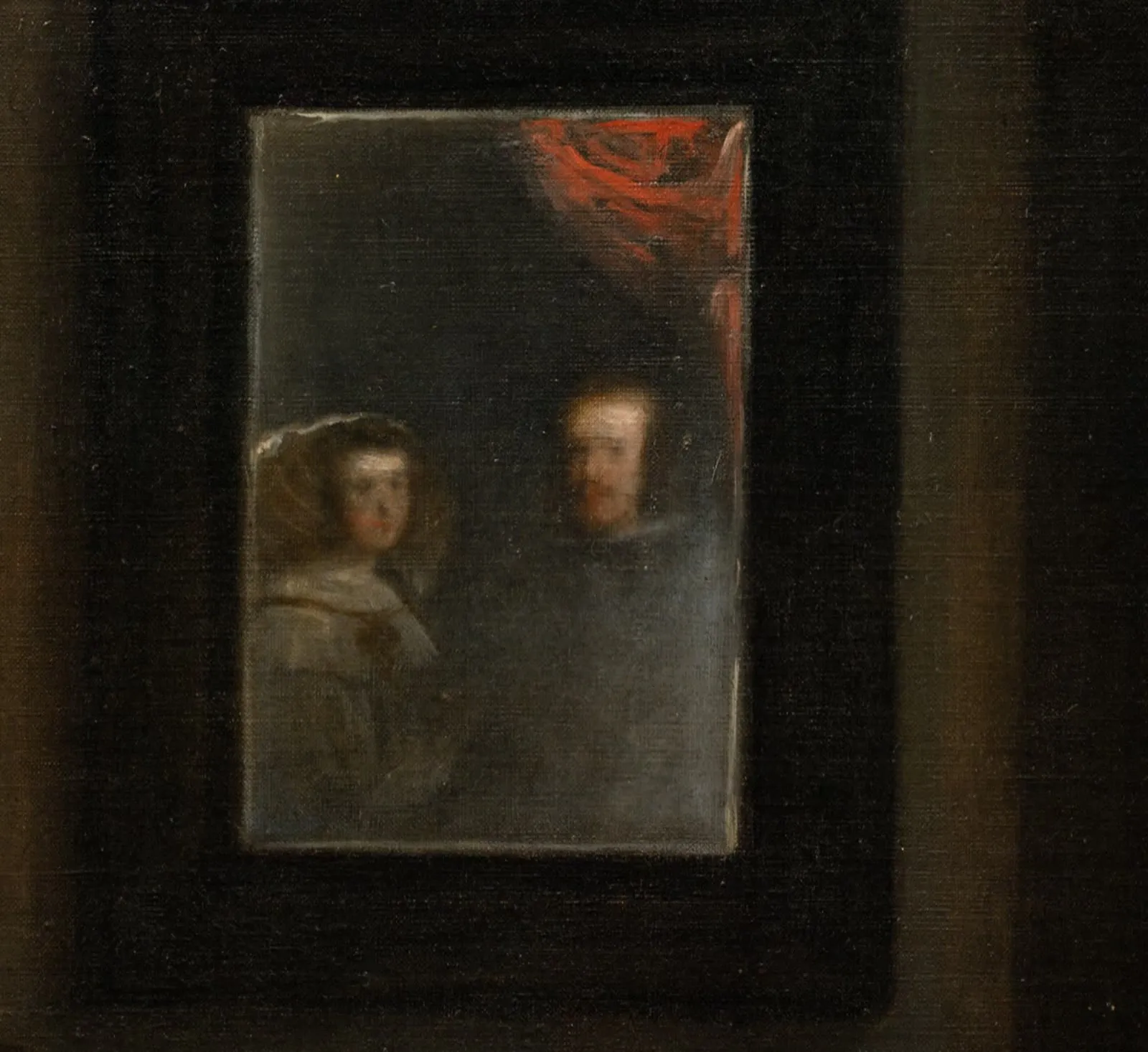
Two lights fill the room: the window on the right and the door at the back. The window lights the Infanta, and it lights the space in front of the painting, where the king, the queen and we are standing.
The dark pictures high on the back wall are copies of Rubens: Minerva punishing Arachne, and Apollo’s victory over Marsyas. Two stories of mortals who challenged gods at their own art, and paid for it. In seventeenth-century Spain, painting was a craft, not an art like poetry or music. Velázquez hung those two stories over his own head.
The brush
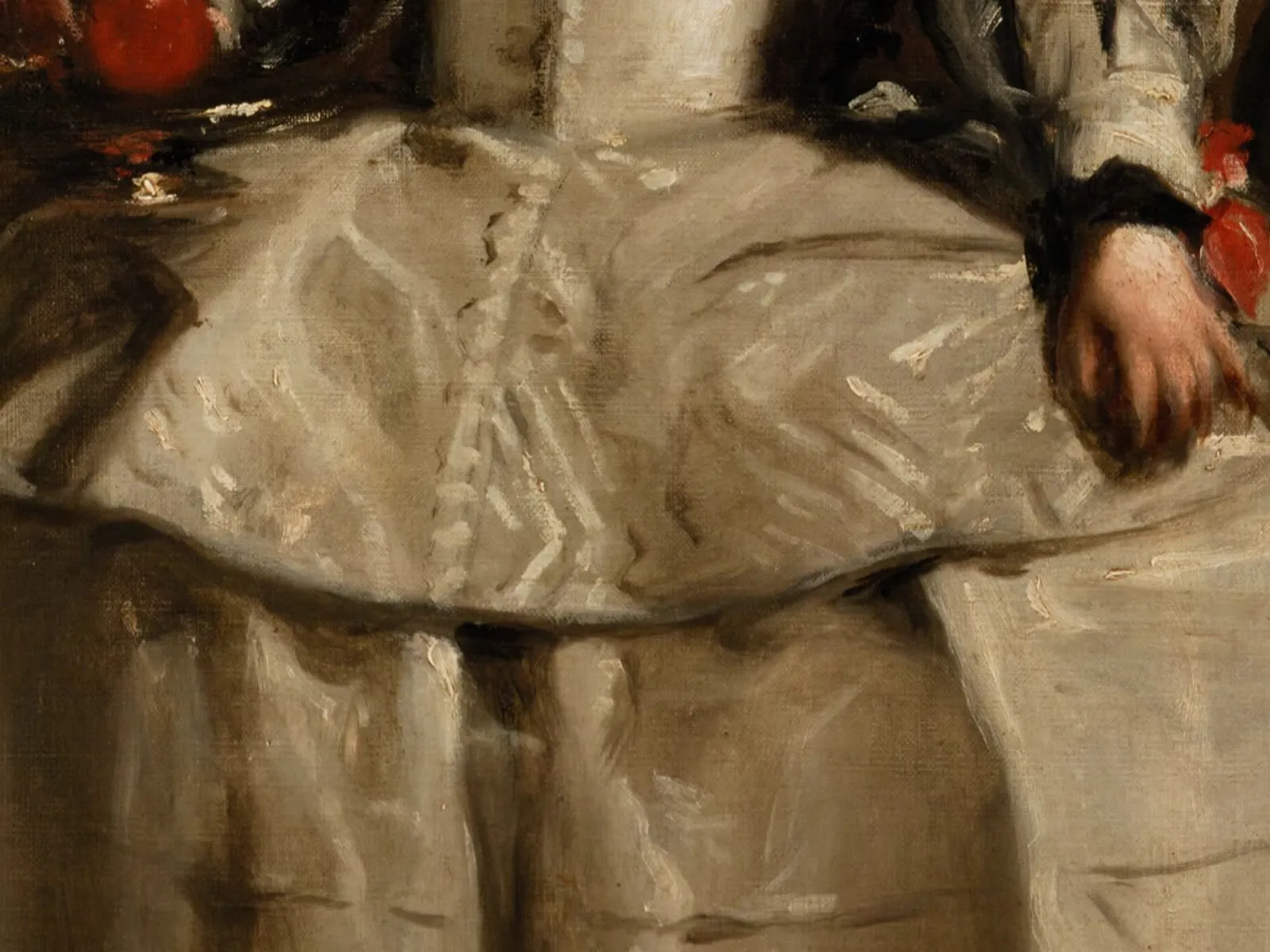
Up close, the Infanta’s dress is a few strokes of white and grey. The flowers in her hair are three touches. The dog’s coat is one sweep of the brush. From across the room it’s silk, and hair, and a dog asleep.
Velázquez painted what the eye sees at a distance, not what it sees an inch away. Clark thought the whole painting stood on that: one consistent scale of light and shade, carried in the painter’s head from the first figure to the last.
The cross
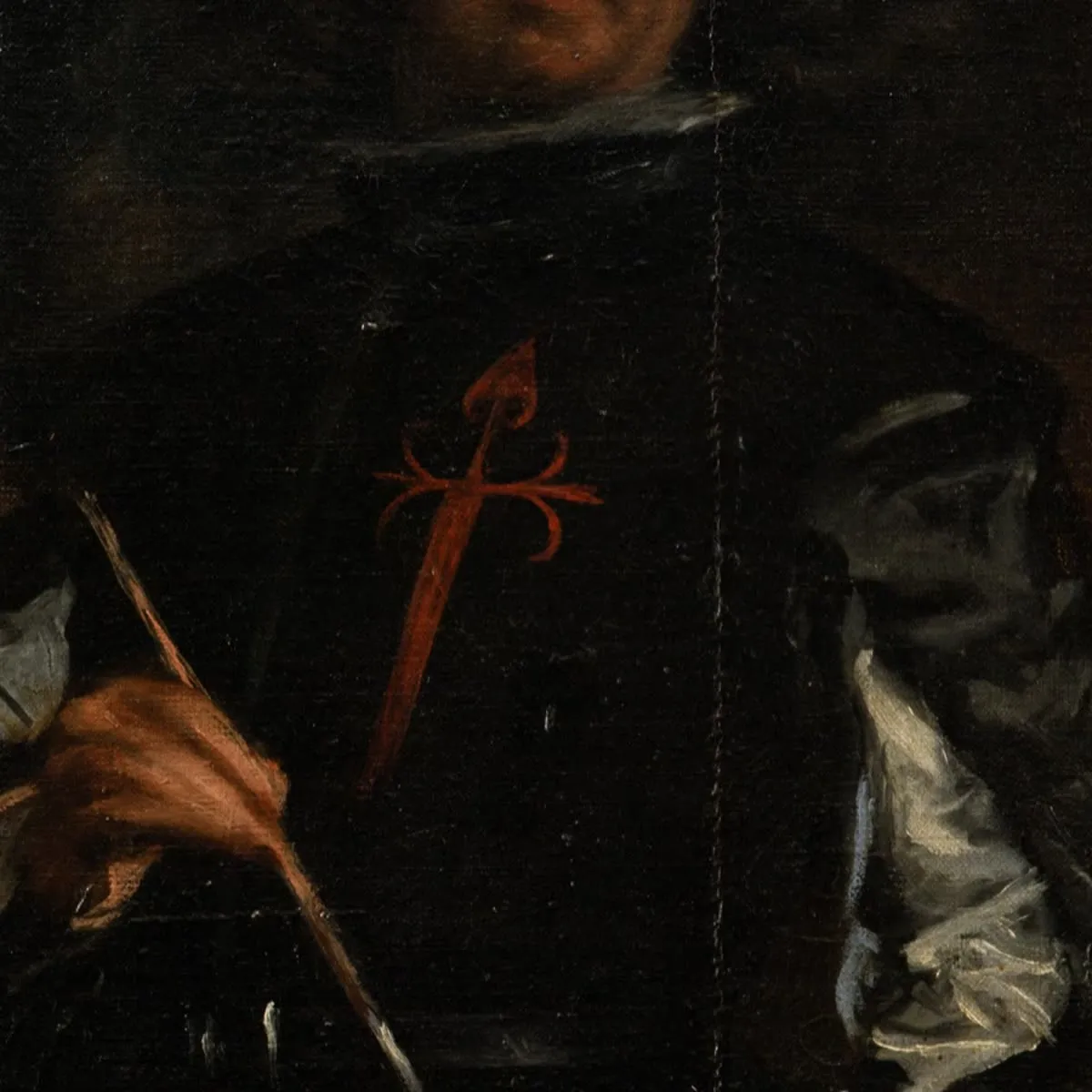
On Velázquez’s chest, the red cross of the Order of Santiago. He didn’t have it when he painted this. The order refused men who worked with their hands, and he spent years arguing that a painter did not.
He was admitted in 1659, three years after the painting and a year before his death. The cross was added afterwards, on the king’s order; and some say, Palomino wrote, that the king painted it himself.
What it became
For a long time the painting had no name but The Family. In 1734 the Alcázar burned; the painting was carried out, and the Infanta’s left cheek had to be repainted. In 1843 the Prado’s catalogue called it Las Meninas, and the name stayed.
Luca Giordano, one of the few painters let into the king’s private rooms, called it the theology of painting. Foucault opened a book with it. Picasso spent the autumn of 1957 painting it fifty-eight times.
The film
The same eight chapters, as a film of four and a half minutes.